If you've been searching for honest dumpster pad cleaning prices in Wayne, NJ, here's the direct answer: costs vary considerably depending on the size of the pad, how soiled it is, how accessible it is, and whether hot water equipment or specialty degreasers are required. A small residential pad in decent condition sits toward the lower end of the range; a large commercial enclosure packed with grease, food waste, and months of buildup sits toward the higher end — sometimes significantly higher. No reputable contractor can give you a firm number without seeing the job. What this guide will do is walk you through every factor that drives the price, explain what separates a real cleaning from a rinse-and-walk, and help you ask the right questions before you hire anyone.
Why Dumpster Pad Cleaning Is More Involved Than It Looks
A dumpster pad absorbs punishment that almost no other surface on a property does. Bags tear, liquids leak, grease renders out of food waste, and organic matter breaks down directly on the concrete. In Wayne and the broader Passaic County area, New Jersey's climate compounds the problem: freeze-thaw cycles through winter open micro-cracks in the slab and drive contaminants deeper, while the heat and humidity of summer accelerate mold growth and bacterial activity. By the time a pad starts to smell, the soiling has typically worked its way well into the pores of the concrete — not just sitting on the surface.
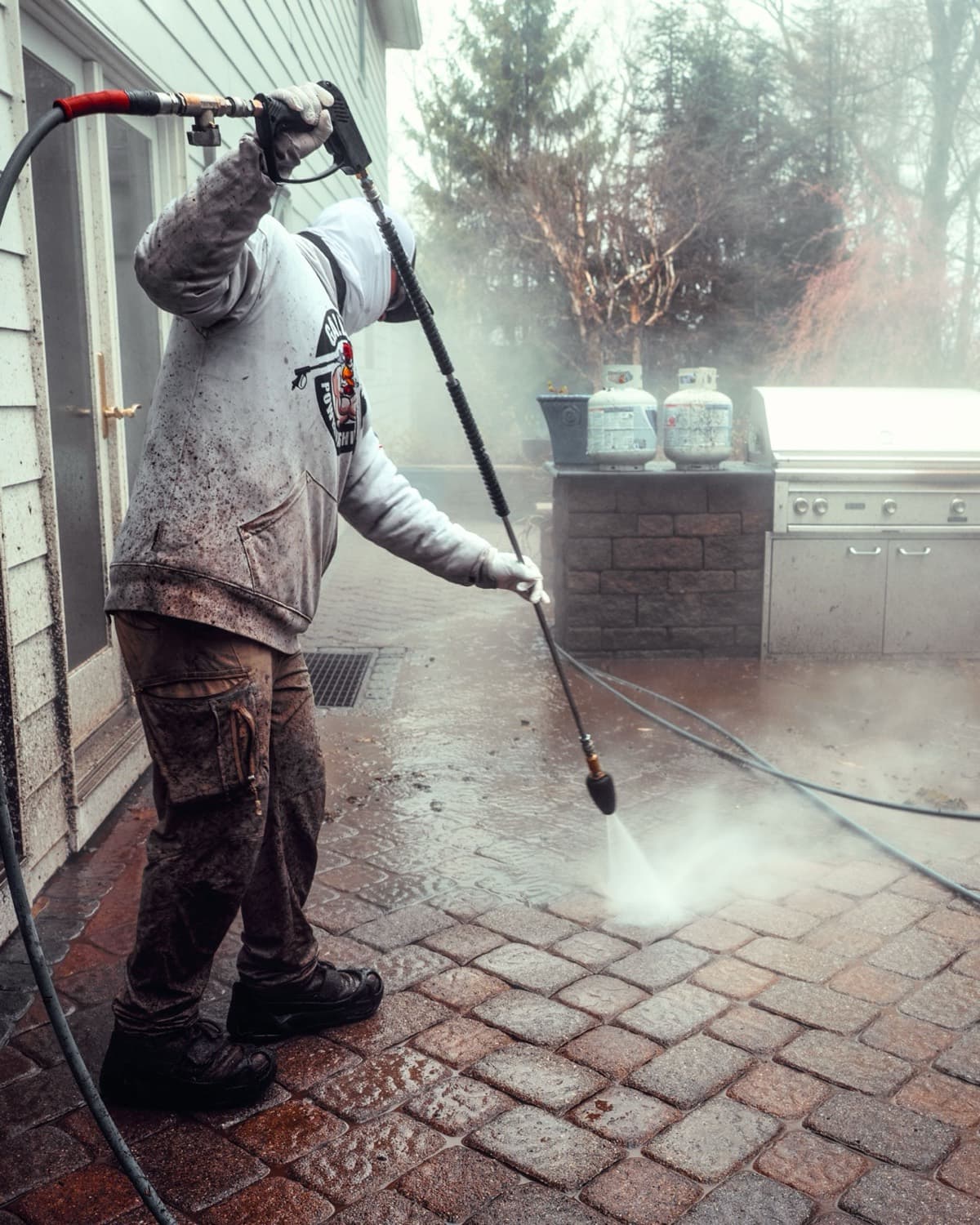
A standard garden hose does nothing useful here. Professional power washing addresses the problem with commercial-grade pressure equipment, hot water capability, and biodegradable degreasers that break the molecular bond between grease and concrete before a high-pressure rinse removes it. The process is categorically more demanding than washing a driveway or sidewalk, which is one of the core reasons dumpster pad cleaning prices don't fit a simple flat-rate model.
What Actually Drives Dumpster Pad Cleaning Prices
Understanding these variables helps you interpret any quote you receive — and spot a lowball when you see one.
- Size of the pad. A single residential trash-can apron and a four-bin commercial enclosure are entirely different jobs. More square footage means more time on-site, more chemical product, and more water. Pricing scales accordingly.
- Level of soiling and how long it's been neglected. A pad maintained on a quarterly schedule is far easier to restore than one untouched for two or three years. Severe buildup requires longer degreaser dwell times, multiple passes, and occasionally agitation with surface-cleaning attachments — all of which add labor.
- Hot water vs. cold water equipment. Hot water pressure washing cuts through grease in a way cold water simply cannot replicate. When a job calls for hot water — and most commercial dumpster pads do — it requires specialized equipment that costs more to operate. The tradeoff is dramatically better results. A contractor offering a suspiciously low price may be running cold water only.
- Accessibility and site conditions. A dumpster that needs to be relocated before cleaning, a tightly fenced enclosure that restricts equipment maneuverability, or a pad on an upper level of a parking structure all add complexity and time to the job.
- Wastewater management. This is a factor many people don't think about. The wash water coming off a contaminated dumpster pad cannot simply run into a storm drain — that's regulated under EPA and local ordinances. Responsible contractors account for containment and proper disposal of that wastewater. If a quote doesn't reflect this, ask how they handle it.
- Frequency of service. A one-time deep clean on a badly neglected pad is the most labor-intensive scenario. Clients who schedule recurring cleanings — monthly for busy restaurants, quarterly for lower-volume commercial properties — typically see lower per-visit costs because ongoing maintenance prevents buildup from reaching worst-case levels.
Honest Price Ranges: What to Expect in the Wayne, NJ Area
Because dumpster pad cleaning prices shift so much based on the factors above, any contractor who quotes you a firm number over the phone — without asking about pad size, condition, or access — is almost certainly lowballing. That said, here is an honest picture of what the market looks like in Wayne and surrounding Passaic County towns:
- Small residential pads in average condition — a concrete apron or side-yard slab used for household trash cans — tend to fall toward the lower end of the range, often a few hundred dollars or less for a straightforward single-visit cleaning.
- Mid-size commercial pads — a single- or double-bin enclosure at a retail location or small apartment building with moderate grease and staining — typically run several hundred dollars, with the exact figure depending on size and how long it's been since the last cleaning.
- Large commercial enclosures — multi-bin pads at restaurants, grocery stores, large apartment complexes, or industrial facilities with heavy grease accumulation, biological contamination, difficult access, or drainage challenges — can run considerably higher. In severe cases, a single deep-clean visit can reach four figures before recurring maintenance brings future visits back down.
Recurring service agreements generally reduce the per-visit cost because the work involved at each visit is substantially less. For Wayne business owners managing health code compliance or odor complaints from tenants and neighbors, a scheduled maintenance plan is usually the most cost-effective long-term approach.
Residential vs. Commercial Dumpster Pads: Key Differences
Most single-family homes in Wayne don't have a formal poured-concrete dumpster pad, but many have a designated area — a concrete apron, a garage side pad, or a spot at the end of a driveway — where trash cans sit between pickups. That surface sees the same drips, leaks, and odors as any dumpster pad, and power washing can restore it. For homeowners, this is usually a straightforward job that pairs well with a broader driveway or concrete cleaning visit.
Commercial properties are a different picture. Restaurants, retail centers, apartment complexes, and office buildings throughout Wayne and Passaic County typically maintain formal enclosed dumpster areas that take on heavy use throughout the week. These pads often require both degreasing and sanitizing, and the wastewater management piece becomes more important. Many commercial property managers and restaurant owners in New Jersey schedule pad cleanings on a monthly or quarterly cycle to stay ahead of health department requirements and prevent the kind of odor buildup that generates tenant or neighbor complaints.
Why Renting Equipment Is Usually the Wrong Call
Consumer and light-commercial rental pressure washers run cold water at pressures adequate for rinsing a deck or patio. They are not designed for compacted grease and biological contamination on a dumpster pad. Beyond the equipment limitation, you would need to source appropriate commercial degreasers, understand safe dwell times and dilution ratios, and figure out compliant disposal for the contaminated runoff — which is a regulated waste stream, not something you wash into the storm drain.
A licensed, insured professional brings the right equipment, the right chemistry, and the experience to manage the entire job responsibly. Gallo Bros Power Washing is a member of the Power Washers of North America (PWNA) and OSHA-certified, meaning the work is performed to established industry and safety standards — not improvised on arrival.
Questions to Ask Before You Hire Any Contractor
Whether you call us or get additional quotes, these are the questions worth asking every contractor:
- Are you licensed and insured in New Jersey?
- Do you use hot water equipment for grease removal, or cold water only?
- What degreasers do you use, and are they biodegradable and safe for concrete?
- How do you contain and dispose of wastewater from a contaminated pad?
- Can you provide a recurring maintenance plan, and does pricing reflect regular service versus a one-time deep clean?
- Will someone assess the job in person before giving a final price?
That last point matters. A contractor who delivers a confident flat rate over the phone without seeing your pad's size, condition, or access situation is quoting blind. Low numbers given that way have a habit of changing on arrival, or the job gets rushed to fit the price.
Frequently Asked Questions About Dumpster Pad Cleaning
- How often should a commercial dumpster pad be cleaned? For restaurants and food-service businesses, monthly cleaning is common and often advisable for health code compliance. Lower-volume commercial properties typically do well on a quarterly schedule. Residential pads can often be addressed once or twice a year, or as part of a broader annual exterior cleaning.
- Will power washing remove the odor? Yes — when the cleaning is done properly. Hot water, a quality degreaser, and sufficient dwell time break down the organic material that causes the smell, rather than simply rinsing the surface. A cold-water rinse alone will not eliminate deep odors.
- Does it matter what the pad is made of? Most dumpster pads in Wayne are poured concrete, which handles professional pressure washing well. If your enclosure includes brick, pavers, or asphalt sections, tell the contractor in advance — the approach and pressure settings may need to be adjusted.
- Is there a best time of year to schedule this service? In New Jersey, spring is the most common time to address pads that have accumulated winter buildup, and fall cleaning helps prevent odor and mold from compounding through the cold months. That said, professional equipment handles this work year-round — there's no reason to let a problem pad wait until a specific season.
About Gallo Bros Power Washing
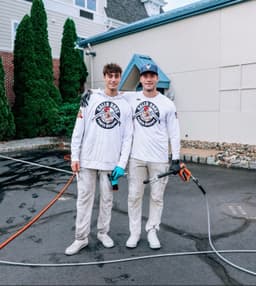
Gallo Bros Power Washing is a family-owned company operated by brothers Zach and Nick Gallo, serving Wayne and communities throughout North Jersey. With 834+ five-star reviews, we've built our reputation on honest pricing, thorough work, and showing up when we say we will. We are licensed, insured, PWNA members, and OSHA-certified.
We work with both homeowners and commercial property managers across Passaic County — from one-time pad cleanings to recurring maintenance agreements designed around your property's specific use and schedule. When you request a quote, someone will assess the job in person and give you a number that reflects what the work actually involves.
Stop guessing what your dumpster pad cleaning will cost. Request a free on-site quote and get an honest, specific price based on your property in Wayne, NJ.