When you hire a professional power washing company in Livingston, NJ, one of the first things worth asking about is their equipment. A true commercial pressure washing setup is not the same machine you rent from a hardware store on a Saturday morning. The difference shows up immediately in the results — cleaner surfaces, less risk of damage, and work that actually holds up through the next season. This guide explains what separates professional-grade equipment from consumer gear, why it matters specifically for homes in Livingston and Essex County, and what you should expect when you hire a qualified crew.
What a Commercial Pressure Washing Setup Actually Includes
A commercial setup is a system, not just a single machine. Professional rigs include several key components working together, and understanding each one helps you ask better questions when you're comparing companies.
- High-flow, hot and cold water capability. Commercial units deliver water at flow rates of 4–8+ gallons per minute (GPM), compared to 1.5–2 GPM on most consumer machines. Higher GPM means faster, more thorough rinsing — not just higher pressure. Hot water capability adds cleaning power on grease, oil, and heavy organic buildup that cold water alone cannot fully break down.
- Variable pressure control. Professional equipment lets a technician dial pressure up or down depending on the surface. Concrete can handle aggressive cleaning. Wood siding, stucco, painted surfaces, and asphalt shingles require a much gentler soft-wash approach. Fine control over output pressure is what prevents costly damage.
- On-board water tanks. Professional trucks carry their own water supply, so work is not entirely dependent on your outdoor spigot. This matters on properties where water pressure is low, where the spigot is far from the work area, or where access is limited on larger lots.
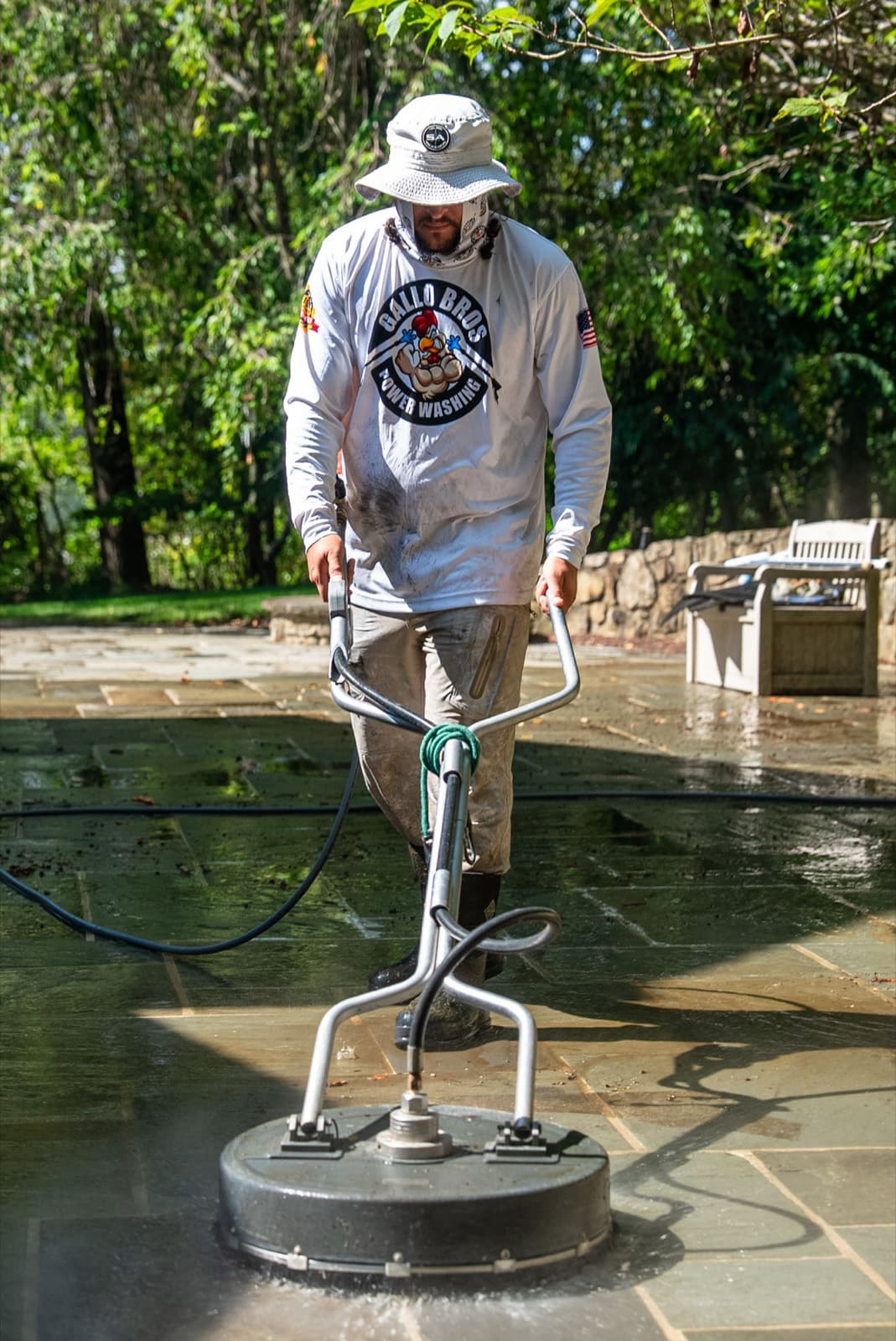
- Professional-grade surface cleaners. Flat surface cleaners attach to the wand and spin two jets simultaneously, producing uniform cleaning patterns on driveways and walkways without the tiger-striping that a standard wand leaves behind.
- Chemical injection systems. Soft washing relies on a metered application of biodegradable cleaning solutions. Commercial rigs have downstream or upstream chemical injection built in, so technicians can switch seamlessly between pressure washing and soft washing on the same visit without changing equipment.
Consumer pressure washers sold at big-box stores are designed for occasional residential use. They work fine for cleaning a car or a small patio table. They are not built to clean a two-story colonial's siding, a long driveway, a retaining wall, or a moss-covered roof safely, efficiently, or without risk of surface damage.
Why Equipment Quality Matters for Livingston Properties
Livingston is a town of well-maintained, higher-value homes — colonials, Tudors, bi-levels, and newer construction spread across neighborhoods from the Eisenhower Parkway corridor to South Orange Avenue. Many of these properties have a mix of surfaces in close proximity: asphalt driveways, concrete walkways, brick or paver patios, vinyl or fiber-cement siding, and wood or composite decks. Each surface has a different tolerance for pressure and a different cleaning chemistry requirement.
Using the wrong pressure on fiber-cement siding can drive water behind the boards and trigger mold growth inside the wall cavity — a repair that costs far more than the cleaning job itself. Too much pressure on aged brick mortar joints can begin to erode the mortar over time, creating a water intrusion problem. Underpowered equipment, on the other hand, leaves behind biofilm, oxidation, and embedded organic material that reappears within weeks. A properly configured commercial pressure washing setup solves both problems by giving the technician the range and control to match the method to the material.
Essex County's climate adds its own demands. Livingston properties face freeze-thaw cycles every winter that open small cracks in concrete and masonry, significant pollen counts in spring that coat every surface, heavy summer humidity that promotes algae and mold growth on north- and east-facing surfaces, and leaf tannin staining in the fall. Professional detergents and low-pressure application treat biological growth — algae, mildew, lichen — at the root rather than simply blasting the visible surface layer off temporarily. Without a chemical treatment step, regrowth is fast.
Commercial Pressure Washing Setup vs. Soft Washing: When Each Method Is Used
One mark of a professional company is knowing when not to use high pressure. The method should follow the surface, not the other way around. General guidelines used on Livingston properties:
- High-pressure washing: Concrete driveways and aprons, concrete walkways, brick pavers (with appropriate care based on age and condition), pool decks, garage floors, and heavily soiled retaining walls.
- Soft washing — low pressure plus chemical treatment: Roofs (asphalt shingles especially), vinyl siding, wood siding, stucco, EIFS, painted surfaces, fascia and soffits, and wood or composite decks. High pressure on asphalt shingles strips granules and voids manufacturer warranties.
- Combination approach: Brick and natural stone, depending on age and condition. Newer, solid masonry may tolerate moderate pressure with appropriate detergent. Older, weathered brick often needs a low-pressure detergent application followed by a gentle rinse to avoid surface erosion.
A company that arrives with one pressure setting and applies it to every surface on your property is not following a professional process. Before you book anyone, ask them to walk through specifically how they will treat each surface on your property. That single question reveals more about their knowledge and equipment than any marketing material will.
What Professional Power Washing Costs in Livingston
Pricing for power washing services in Livingston varies considerably based on the size of your home, the number of stories, the surfaces being cleaned, their current condition, and accessibility. A single-story ranch with a modest driveway is a fundamentally different scope of work from a large three-story colonial with an extended driveway, a wraparound paver patio, a wood deck, and several years of algae growth on the shaded north face of the house.
To give you an honest sense of scale:
- Driveway cleaning can range from a couple of hundred dollars for a short single-car driveway in reasonable condition to significantly more for a long, wide, or horseshoe driveway with embedded staining, oil spots, or years of neglect.
- House washing ranges from a few hundred dollars on a small single-story home with accessible siding to well over a thousand dollars on a large multi-story home with complex rooflines, detailed trim, and heavy biological growth.
- Paver sealing typically runs approximately $1.50 to $3.50 per square foot, depending on paver type, condition, and whether joint sand replacement is needed. If re-leveling is required, that work runs approximately $16 to $20 per square foot — a separate scope with its own assessment.
- Roof cleaning pricing depends heavily on roof pitch, total square footage, accessibility, and the degree of algae, moss, or lichen growth present. A small, low-slope ranch roof is a very different job from a large, steep, complex roofline with heavy organic buildup.
Any number you see published online without a site visit is a rough estimate at best. Reputable companies do not quote firm prices on jobs they have not seen. If a contractor gives you a flat rate over the phone without asking about your property in detail, treat that number with caution — it is likely to change once they arrive, or it reflects a level of work that will not fully address your specific surfaces and conditions.
What to Look for When Hiring a Power Washing Company in Livingston
Before you book any exterior cleaning contractor, verify the following:
- Licensing and insurance. New Jersey requires contractor registration. General liability insurance protects your property if something goes wrong during the job. Ask to see both before work begins.
- PWNA membership. The Power Washers of North America sets industry training and safety standards. Membership indicates a company is invested in professional development and best practices within the trade.
- OSHA certification. Roof work, ladder work, and multi-story cleaning carry real safety risks. Crews trained to OSHA standards follow established protocols that protect both workers and your property.
- Local track record. Gallo Bros Power Washing is a family-owned company — founded and operated by brothers Zach and Nick Gallo — with 834+ five-star reviews from homeowners across North Jersey, including many in Livingston and throughout Essex County. That kind of sustained review record comes from consistent, repeatable work done correctly over time.
- Transparent process. A trustworthy company explains exactly what they will do to each surface before they start, not after something goes wrong. If a contractor cannot describe their method in plain terms, that is a red flag.
How to Prepare Your Livingston Home for a Power Washing Visit
A little preparation on your end makes the job go faster and protects your property in the process:
- Close all windows, doors, and basement windows before the crew arrives. Even low-pressure soft washing produces overspray.
- Move outdoor furniture, potted plants, grills, and decorative items away from all work areas.
- Point out any known issues — broken caulk, cracked mortar, damaged siding sections, or loose gutters — so the crew can adjust their approach around those spots.
- Make sure a working outdoor spigot is accessible. Even with an on-board water tank, connection to your supply line is standard practice for full-property jobs.
- Keep pets and children inside for the duration of the cleaning. Cleaning solutions are diluted and environmentally responsible, but work areas are not safe to walk through during active cleaning.
Frequently Asked Questions About Commercial Pressure Washing in Livingston
How often should I have my home professionally washed? Most Livingston homeowners benefit from a full exterior cleaning every one to two years. North-facing surfaces, heavily shaded areas, and homes near wooded lots may need more frequent attention due to faster algae and mold growth. Driveways and walkways, which take constant foot and vehicle traffic, often benefit from annual cleaning.
Will power washing damage my landscaping? A professional crew using correctly diluted, biodegradable detergents and appropriate rinsing techniques will minimize any impact on surrounding plants. Before soft washing near beds or foundation plantings, crews should wet down plant material and rinse thoroughly after treatment. Ask any company you're interviewing how they protect landscaping during a job.
Can I pressure wash my own roof? You should not. Pressure washing asphalt shingles strips granules, accelerates aging, and can void manufacturer warranties. Roof cleaning requires a dedicated soft-wash approach — low pressure, appropriate dwell time, and the right chemical dilution. It also requires working safely at height, which is not a DIY project on most residential roofs.
What is the best time of year to schedule exterior cleaning in New Jersey? Late spring through early fall is the most practical window — surfaces are accessible, temperatures support chemical effectiveness, and cleaning ahead of summer humidity prevents algae from establishing over the warmer months. Fall cleaning before winter is also worthwhile to remove leaf tannin staining and organic debris before freeze-thaw cycles drive moisture into cracks and joints.
Schedule a Free Quote for Your Livingston Property
If you want to see what a true commercial pressure washing setup can do for your home's appearance, condition, and long-term maintenance, Gallo Bros Power Washing is ready to take a look. We are a licensed, insured, PWNA-member company with 834+ five-star reviews from homeowners across North Jersey. Our crews are OSHA-certified, our process is transparent, and our pricing is based on what we actually see at your property — not a number pulled from a website. Visit our free quote page to schedule an on-site assessment with no obligation and a real price based on your specific home.