If you are searching for commercial pressure washing in New Jersey, you already know that not every contractor is equipped to handle the job correctly. Whether you manage a commercial property in Bergen County or own a home in Ridgewood, the stakes are the same: the wrong equipment, wrong pressure, or wrong chemistry can damage surfaces that cost far more to repair than to clean. This guide covers what professional exterior cleaning actually involves, what it honestly costs, and what to verify before you hire anyone to work on your property.
Why North Jersey Properties Need Professional Exterior Cleaning
Ridgewood and the surrounding Bergen County area sit in a climate zone that delivers the full seasonal range: humid summers, hard winters, and a spring that brings mold, algae, and pollen in significant quantities. That combination takes a steady toll on exterior surfaces. Driveways accumulate oil stains and embedded grime. Siding develops black streaking from algae and mildew. Walkways and patios turn slippery with biofilm. Wood fences and decks gray out from UV exposure and biological growth.
The damage is not purely cosmetic. Algae and mold hold moisture against surfaces. On wood, that accelerates rot. On masonry, freeze-thaw cycles drive trapped moisture deeper, causing spalling and cracking. On asphalt roofing, the bacterium Gloeocapsa magma — responsible for the dark streaking you see on many North Jersey roofs — consumes the limestone filler in shingles and shortens roof life measurably. Cleaning these surfaces on a regular schedule removes the threat before it becomes a costly repair.
Curb appeal also carries real financial weight in this market. Homes in Ridgewood sell at a premium, and a neglected exterior visibly undercuts perceived value. For property managers overseeing commercial buildings, a dirty facade signals poor maintenance to tenants, customers, and inspectors alike. Professional exterior cleaning is a maintenance expense that protects a far larger asset.
What Commercial Pressure Washing Equipment Actually Does Differently
Consumer pressure washers from a hardware store typically produce 1,500 to 2,000 PSI at modest flow rates. Commercial-grade equipment used by professional crews runs significantly higher — often 3,000 to 4,000 PSI or more — with hot-water capability and flow rates that cover large commercial or residential surfaces efficiently. The difference is both cleaning power and speed.
Raw pressure, however, is not always the right tool. On vinyl siding, painted wood, stucco, or asphalt shingles, excessive pressure causes real damage: stripped paint, water forced behind siding panels, granules blasted off roofing. Professional crews know when to reduce pressure and rely instead on volume, heat, and professional-grade detergents. Soft washing — low pressure combined with biodegradable cleaning solutions — is the correct method for roofs, most siding types, and delicate masonry. The chemistry does the work; the rinse clears it.
A licensed, insured contractor operating commercial equipment in North Jersey also has the certifications and protocols to work safely at height, around active landscaping, and near public sidewalks and roadways — a real consideration in dense Bergen County neighborhoods where driveways often abut busy streets.
Common Surfaces and What Each One Requires
Knowing what each surface demands makes you a better-informed customer and helps you have a more productive conversation with any contractor you evaluate.
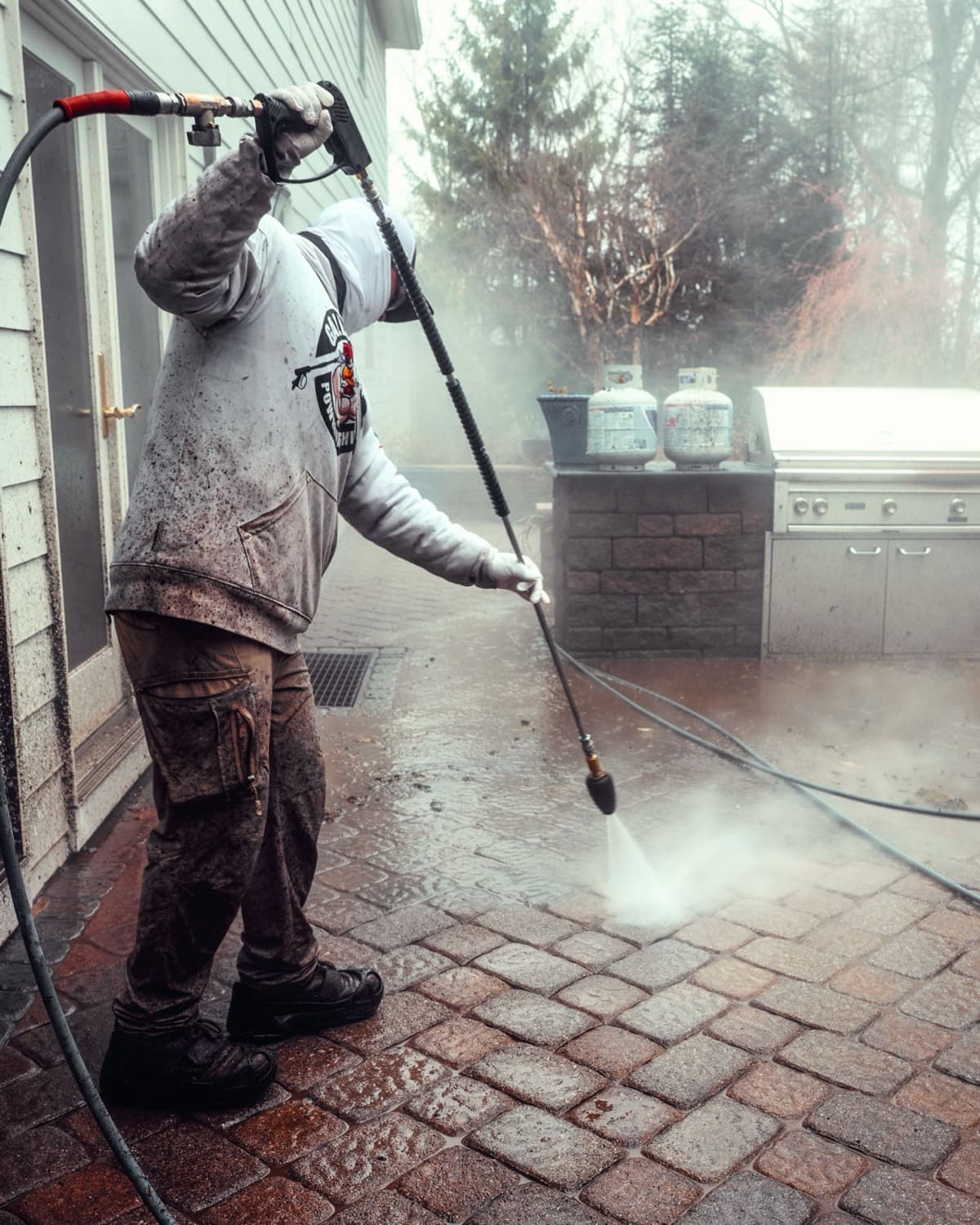
- Driveways and walkways: Concrete and pavers respond well to hot-water pressure washing paired with a degreaser for oil staining. Paver joints often need re-sanding after cleaning, and sealing afterward significantly extends the cleaned appearance and protects the surface.
- House siding: Vinyl, aluminum, fiber cement, and wood each require different pressure settings and detergents. Soft wash is standard for most siding — it kills biological growth at the root rather than temporarily blasting the visible surface layer.
- Roofs: Soft wash only. High pressure on shingles voids most manufacturer warranties and damages the surface. A sodium hypochlorite-based solution kills algae and moss at the membrane level; the results last far longer than a pressure rinse alone.
- Decks and fences: Wood requires careful pressure management. Too much pressure raises the grain and damages the surface fibers. A controlled wash followed by staining or sealing is the correct sequence and produces a result that holds up through subsequent seasons.
- Patios, retaining walls, and masonry: Natural stone and concrete block vary widely in hardness and porosity. A qualified crew will test a small area before committing pressure and chemistry across the full surface.
- Gutters: Gutter brightening removes the black tiger-stripe oxidation streaks that form on the exterior face of gutters. This is a separate process from gutter cleaning and uses a specialized chemical application rather than pressure.
For a complete breakdown of what each service involves, visit our power washing services page.
Honest Pricing: What Exterior Cleaning Actually Costs in New Jersey
Pricing for exterior cleaning in New Jersey varies more than most property owners expect, and any contractor who quotes you a firm number over the phone without seeing the property is either guessing or lowballing to win the job. Size, surface material, number of stories, accessibility, condition, and the degree of biological growth all affect the scope and time required. Here is an honest look at the ranges you will encounter in Bergen County:
- House washing: Can range from a few hundred dollars for a small single-story home with light buildup to well over a thousand dollars for a large, multi-story property with significant algae or mildew. Siding material and surface condition matter considerably.
- Driveway and walkway cleaning: Depends on surface type, square footage, and staining. A standard two-car concrete driveway is a very different job from a large paver driveway with embedded oil stains and years of accumulated grime.
- Paver sealing: Generally runs in the range of $1.50 to $3.50 per square foot, depending on the sealer product, number of coats required, and the condition of the surface going in.
- Paver re-leveling: Where individual pavers have shifted or settled, this labor-intensive work typically runs $16 to $20 per square foot, as it involves lifting, re-bedding, and resetting pavers individually.
- Roof cleaning: Can range from a few hundred dollars for a small, accessible ranch roof with moderate algae to several thousand dollars for a large, steep, or architecturally complex roof with heavy moss or biological accumulation.
- Deck cleaning and prep: Varies by deck size, wood species, and condition. A deck with multiple seasons of buildup or significant graying requires considerably more time and product than one maintained annually.
- Commercial properties: Warehouses, retail storefronts, parking structures, and multi-unit buildings involve larger surface areas, more complex access requirements, and often stricter scheduling constraints. Pricing scales accordingly and is best assessed with an on-site walkthrough.
The only way to get a price you can rely on is an on-site assessment. Every property is different — lot configuration, roof pitch, proximity to trees, surface age and condition, and the number of stories all affect what the job actually requires.
What Sets a Qualified Contractor Apart in Bergen County
North Jersey has no shortage of pressure washing operators. The gap between a qualified contractor and an underinsured side operation is significant, and it matters most when something goes wrong. Before hiring anyone, verify the following:
- Liability insurance and workers' compensation: If a worker is injured on your property or a window is damaged by misdirected pressure, the contractor's insurance should cover it — not your homeowner's or commercial policy.
- OSHA certification: Roof work and elevated ladder work carry documented fall risk. OSHA-certified crews operate with safety protocols that protect both workers and property owners.
- Industry membership: Membership in the Power Washers of North America (PWNA) reflects a commitment to industry standards, proper techniques, and ongoing professional education.
- Verified review history: Look for a sustained volume of reviews over time, not just a recent cluster. Gallo Bros Power Washing has earned 834+ five-star reviews from real customers across North Jersey — a track record built over years of consistent work.
- Written scope before work begins: A reputable contractor provides a written proposal specifying which surfaces will be cleaned, what methods and products will be used, and exactly what the quoted price covers. Verbal agreements leave too much room for dispute.
To learn more about what local customers have experienced working with our team, visit our Ridgewood service area page.
Seasonal Timing and How to Prepare Your Property
The most practical window for exterior cleaning in Bergen County runs from late spring through early fall, when temperatures are consistently above 50°F and surfaces can dry properly after treatment. That said, professional crews work through much of the year on appropriate surfaces. House washing and roof cleaning can be completed on dry days well into October in North Jersey, and some concrete and masonry work can extend further depending on conditions.
For commercial property managers, scheduling matters beyond weather. Parking lots and building exteriors often need to be cleaned during off-hours or on weekends to avoid disrupting tenants or customers. A qualified contractor will work around your operational schedule and handle water management to avoid runoff issues on active properties.
Before a residential crew arrives, remove patio furniture, planters, and items stored against the house. Close all windows and doors. If you have delicate plantings directly adjacent to cleaned surfaces, point them out — professional operators pre-wet landscaping and rinse it after application to minimize chemical contact, but knowing what you are concerned about helps the crew take extra care in the right places.
Bundling multiple services — driveway, siding, deck, and gutters in a single appointment — typically reduces the total cost compared to scheduling each separately and eliminates the need for multiple visits.
Frequently Asked Questions
- How often should I have my home's exterior washed? Most North Jersey homes benefit from a full exterior wash once a year, with roof cleaning every two to three years depending on tree cover and algae growth rate. Commercial properties with high traffic or food service nearby may need more frequent attention.
- Will pressure washing damage my landscaping? Professional crews use pre-wetting and rinsing protocols to protect adjacent plantings. The risk is real with careless operators, which is why hiring a licensed, trained crew matters.
- Is soft washing really as effective as pressure washing? For roofs, siding, and painted surfaces, soft washing is more effective — it kills biological growth at the root rather than dislodging surface material temporarily. Pressure washing is the right tool for hard surfaces like concrete and pavers.
- Do I need to be home during the service? Not necessarily, but it is helpful on the first visit so the crew can point out anything that needs special attention and you can review the work when it is complete.
- What should I do after my pavers are cleaned and sealed? Stay off the surface for the drying time specified by the contractor — typically 24 to 48 hours depending on the sealer used and weather conditions. Avoid dragging furniture across sealed pavers, and reseal on the schedule your contractor recommends, usually every two to four years.
Schedule a Free On-Site Assessment
Gallo Bros Power Washing is a family-owned exterior cleaning company serving Ridgewood, Bergen County, and the broader North Jersey area. We are licensed, insured, PWNA members, and OSHA-certified. We provide free on-site assessments so you receive an accurate price based on your actual property and scope — not a phone estimate that shifts when the crew arrives. To schedule your assessment and get a real quote, visit our quote request page and we will follow up promptly.