
Guide
Polymeric sand, explained properly
What it is, how it goes in, how long it takes to cure — and the honest answer about when new sand will not fix your patio. Written by the crew that does this in North Jersey every week.
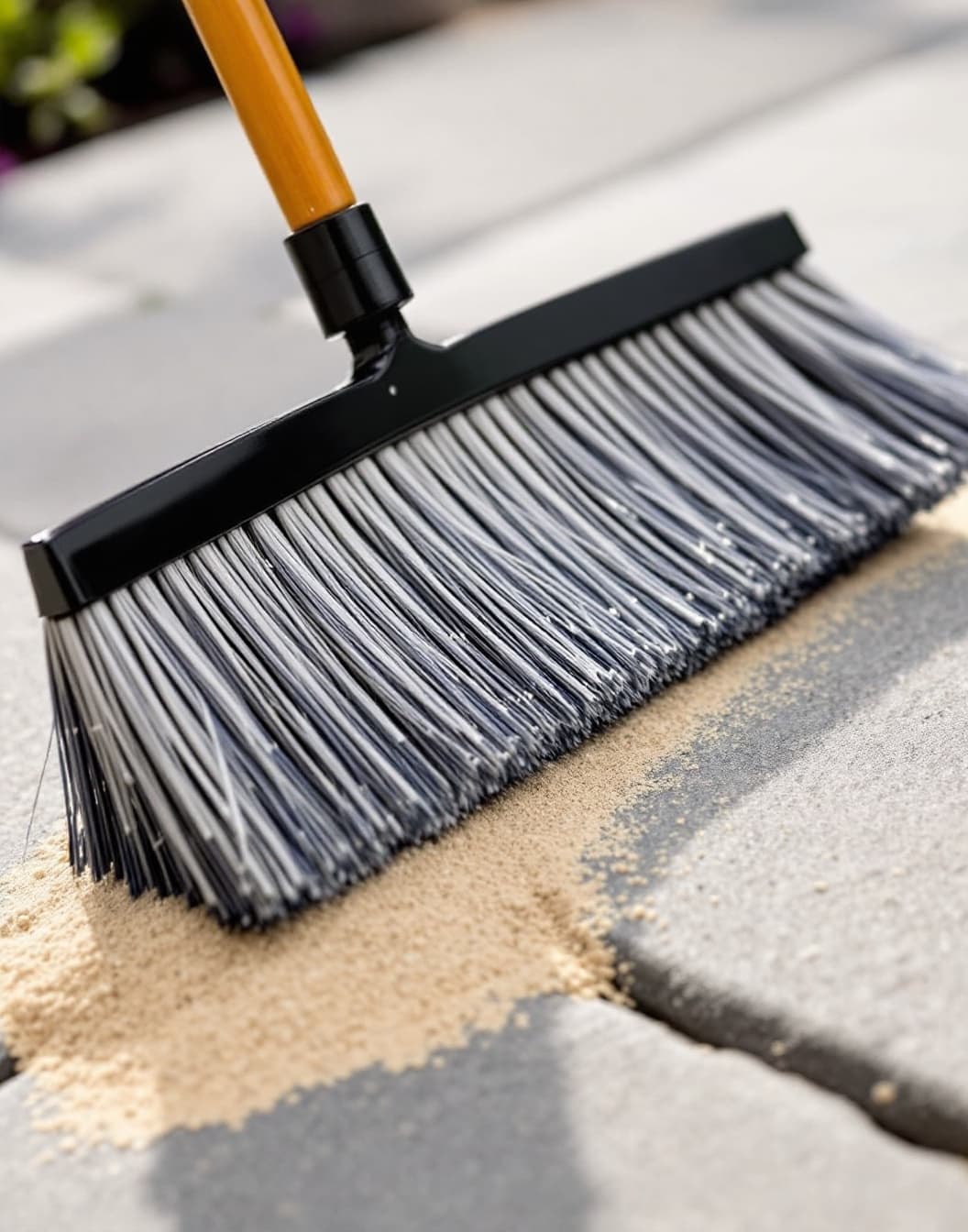
Polymeric sand is joint sand with a binder mixed through it. You sweep it into the gaps between pavers, wet it, and the binder sets — turning what was loose sand into something closer to a flexible mortar. That is the whole idea: joints that stay put instead of washing out every time it rains, and no easy route up for weeds and ants.
It is not a repair. It fixes joints, not the base underneath them — which is the distinction most of the disappointment comes from.
How it goes in
- 01
Get the old sand out
Down at least a quarter of the paver's depth — an inch or so on a standard patio paver. This is the step people skip, and it is the reason the new sand fails: a thin skim has nothing to lock into.
- 02
Make sure everything is dry
Polymeric sand activates with water. Damp joints will set it before it is where it needs to be, and you get haze on the surface you cannot remove.
- 03
Sweep it in, full depth
Work it in until the joints stop taking sand, then top them off. Leave the joints a couple of millimetres below the paver chamfer, not level with the surface.
- 04
Clear the surface completely
Blow or sweep every grain off the faces of the pavers. Sand left on the surface is what hardens into the white haze people complain about.
- 05
Set it with water
A gentle shower, not a jet — and follow the bag's instructions, because the cycles differ by brand. Too much water floats the sand out; too little and it never locks up.
- 06
Leave it alone
Most products want 24 hours before foot traffic and longer before a car. Rain inside that window is what ruins an otherwise good job.
When to do it yourself — and when not to
We seal pavers for a living and we will still tell you plainly: some of these jobs are not worth paying for.
Fine to do yourself
- A small walkway or a short run of joints
- Pavers that are still level and sitting tight
- Two or three dry days in the forecast — it needs to set before it rains
- You can get the old sand out properly first
Sand alone will not fix it
- Joints that have washed out more than once — something underneath is moving
- Pavers that rock underfoot or have sunk at the edges
- Heavy moss, weeds or efflorescence — sand over that traps the problem
- A driveway, where the joint depth and traffic are unforgiving
Joints that wash out repeatedly, or pavers that rock, are a base problem — re-leveling comes first, then sand and sealer.
If you'd rather not
What we do on a full paver restoration
Deep clean to the stone, old joint material out, polymeric sand in full-depth and set, then sealed — matte or wet-look, in beige or slate grey to match your pavers. One visit, priced on site after we see the condition and the joint size.
See paver sealing & restoration834+ five-star reviews across Morris, Bergen, Passaic, Somerset, Sussex, Hunterdon, Essex, Warren & Union Counties.
Polymeric Sand — FAQ
What is polymeric sand?
It is joint sand mixed with a binder that hardens when it gets wet. Once it sets it behaves more like a flexible mortar than loose sand, which is what keeps weeds, ants and wash-out out of the joints between your pavers.
How long does polymeric sand take to cure?
Most brands want the surface kept dry for 24 hours before foot traffic, and 48 to 72 hours before you drive on it. Rain inside that first day is the single most common way a fresh job gets ruined — check the forecast before you start, not after.
How much polymeric sand do I need?
As a rough guide, a 50 lb bag covers roughly 30 to 60 square feet of standard patio pavers, and far less on wide or deep joints. Joint width and depth change it more than area does, which is why estimates by square foot alone tend to come up short.
Why did my polymeric sand wash out or turn white?
Three usual causes: the old sand was not removed deep enough so the new sand had nothing to lock into; the surface was still damp when it went in; or sand was left on the paver faces and hardened there as haze. All three are prep problems rather than product problems.
Is polymeric sand better than regular joint sand?
For almost every patio, yes — regular sand washes out with rain and lets weeds and ants straight through. The exception is a surface that needs to drain freely through the joints, where a permeable jointing product is the right call instead.
Do I need to seal pavers after re-sanding?
You do not have to, and the sand works without it. Sealing does two other things: it brings the color back up, and it makes the surface far easier to clean afterwards. If you are doing the work anyway, doing both in one visit is what most people choose.
Can you just add sand on top of the old sand?
No — that is the version that fails within a season. New polymeric sand needs a clean, deep joint to bind into. If the old material is still in there, you are gluing a thin crust on top of something loose.
North Jersey · 894+ five-star reviews
Pick your own time
Choose a slot that actually suits you and it's confirmed on the spot — no phone tag, no waiting on a callback.
- A real person comes out and prices the work in front of you
- Exact price before anything starts, in writing
- Free, and there's no obligation to book the job
Rather talk it through?
(973) 500-8155info@gallobrospw.com