If you've been searching "how much is roof cleaning near me" and you live in Short Hills, you're asking exactly the right question before calling anyone. The honest answer: professional roof cleaning in the Short Hills area can range from a few hundred dollars for a modest single-story ranch to well over two thousand dollars for a large, steep, multi-gabled colonial — and sometimes more for especially complex rooflines or severe growth. That wide range is not a dodge. It reflects real variables: your roof's square footage, pitch, number of stories, roofing material, how heavily moss or algae has colonized the surface, and how safely a crew can access every section. A number quoted over the phone without seeing your roof is essentially a guess. The only figure that actually means something comes from a free on-site assessment. You can request one anytime at our quote page.
What follows is a practical guide written specifically for Short Hills homeowners — covering the factors that drive cost, the cleaning method that protects your roof, seasonal timing in North Jersey, and the warning signs that tell you it's time to call.
Why Short Hills Roofs Get Dirty Faster Than You Might Expect
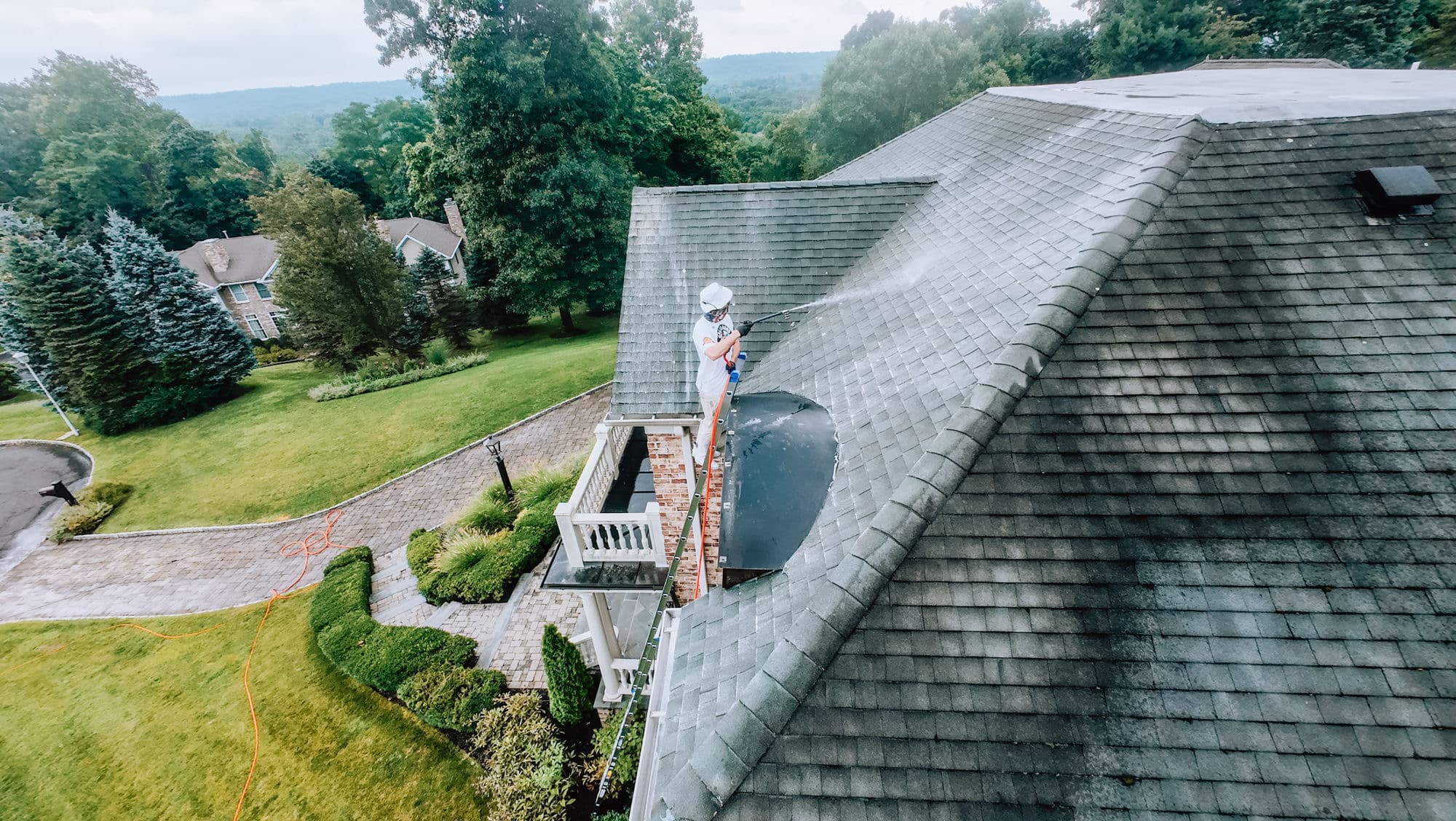
Short Hills sits in the Millburn Township section of Essex County, surrounded by mature hardwood canopy that makes the neighborhood beautiful and keeps rooftops perpetually shaded and damp. That combination is exactly what the algae species Gloeocapsa magma thrives on. It appears first as gray or black streaking running down the shingles. Left untreated, it holds moisture against the roofing material and accelerates granule loss on asphalt shingles. Moss follows in the same shaded, moist zones, working its rhizoids underneath shingle tabs and slowly lifting them over time.
The large, older homes on tree-lined streets throughout Short Hills — many of them center-hall colonials, Tudors, and expanded ranches — tend to have complex rooflines with dormers, valleys, and multiple pitch changes. Those features trap debris and sustain the moisture conditions that organic growth needs to establish itself. This is not unique to Short Hills, but the combination of heavy canopy, architectural complexity, and Essex County's humid summers and wet springs makes consistent roof maintenance more important here than in newer, more exposed developments.
Seasonally, North Jersey's late summer and early fall are when algae growth tends to be most visible after a warm, humid stretch. Spring is when moss rebounds aggressively after winter moisture. If your roof looks significantly darker or greener heading into either season, that's the time to act — not after another full year of growth has set in deeper.
Soft Washing vs. Pressure Washing: What Your Shingles Actually Need
This distinction matters because the wrong method causes real, measurable damage. High-pressure washing strips granules from asphalt shingles, can void manufacturer warranties, and forces water under shingle laps — creating the leak risk it was supposed to prevent. Reputable contractors use soft washing for virtually all residential roof cleaning. Soft washing applies a low-pressure, biodegradable cleaning solution — typically a sodium hypochlorite blend at carefully controlled dilution — that kills algae, moss, lichen, and mildew at the root rather than blasting it off mechanically. The dead growth rinses away gradually, often over the following rain cycles, and the roof surface is treated rather than abraded.
Cedar shakes, slate, and tile require even gentler dilutions and technique than standard asphalt shingles. If a contractor cannot explain the specific solution concentration and application method they plan to use on your roofing material, that is a meaningful red flag. Ask before anyone climbs on your roof.
What Drives the Price on Your Specific Roof
When you request a quote for roof cleaning, a professional estimator will evaluate several factors that have a direct impact on final cost. Understanding these helps you evaluate any quote you receive, from us or anyone else.
- Square footage: More surface area means more solution, more labor time, and more crew. A 1,400 sq ft ranch roof and a 3,200 sq ft colonial roof are genuinely different projects with genuinely different costs.
- Pitch and height: Steep roofs and two-and-a-half story homes require additional safety equipment, slower movement, and more crew time. OSHA fall-protection standards add both time and cost on steeper pitches — and any contractor skipping those requirements is a liability you do not want on your property.
- Severity of growth: Light algae streaking is faster to treat than a thick mat of moss that has been establishing itself for five or more years. Heavy infestations may require longer dwell time, a second application, or pre-treatment of particularly dense patches.
- Roofing material: Asphalt shingles, cedar shakes, slate, and tile each require different solution dilutions and application techniques. Cedar and slate in particular demand a gentler approach and more experienced handling.
- Accessibility: Overhanging trees, steep driveways, limited staging areas, and equipment access constraints all add time to setup and breakdown.
- Bundled services: Many homeowners combine roof cleaning with gutter cleaning since the crew is already staged and the work complements each other naturally. Bundling often makes more financial sense than scheduling two separate visits.
A low price quoted sight-unseen is almost always designed to get a foot in the door before the real cost surfaces. We will not do that to you. Every Gallo Bros estimate starts with a free on-site look at your specific roof.
How Long Does Roof Cleaning Last?
A professional soft-wash treatment typically keeps a roof visibly clean for two to four years, depending on tree coverage, roof orientation, and local moisture levels. In Short Hills, where shade from mature oaks and maples is heavy, homeowners with significant canopy overhead often land on the shorter end of that range. North-facing roof sections and areas near chimneys or valleys tend to re-accumulate growth faster than south-facing, sun-exposed slopes.
Some contractors offer an algae inhibitor applied after cleaning to extend results — a worthwhile conversation if your roof stays shaded for most of the day. Consistent maintenance on a predictable schedule is almost always less expensive than allowing growth to go unchecked for a decade and then tackling a severely affected roof that requires multiple treatments or, worse, accelerated shingle replacement.
Signs It Is Time to Schedule a Roof Cleaning
You do not need to get on the roof to spot these indicators. Check from the ground or from an upstairs window:
- Black or dark gray streaking running vertically down the slope — this is algae, not normal aging or dirt
- Green or brown patches, especially on north-facing slopes or anywhere shaded by trees for most of the day
- Fuzzy or raised growth at ridge caps, in roof valleys, or around chimneys and skylights
- Shingles that look dull, uneven in color, or noticeably darker than when the roof was installed or last cleaned
- Granules accumulating in gutters or at downspout exits more than usual, which can indicate algae-related surface degradation
If you can see any of these from the ground, the growth is likely more extensive than the street-level view suggests. Algae and moss spread outward from an origin point and are consistently worse up close than they appear from below.
Frequently Asked Questions About Roof Cleaning Cost
Can I get an accurate price online or over the phone? Not reliably. Square footage alone does not tell the full story — pitch, material, growth severity, and access all matter. Any flat rate offered without seeing your roof should be treated with skepticism.
Will my homeowner's insurance cover roof cleaning? Generally no — routine maintenance is not covered. However, some policies may be affected by documented neglect. Keeping your roof clean is good maintenance practice regardless of coverage.
Is it safe to clean a roof in cooler weather? Soft-wash solution performs best at moderate temperatures. Late spring through early fall is ideal in North Jersey. Cold temperatures slow the dwell-time effectiveness of the cleaning agents, though fall cleanings before first frost are still practical and worthwhile.
How soon after cleaning will my roof look different? With soft washing, the result is not always immediate. Algae and moss die on contact with the solution but may not fully rinse away until the next rain or two. Most homeowners see a clear difference within two to four weeks.
Why Short Hills Homeowners Choose Gallo Bros
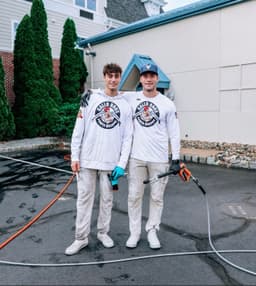
Gallo Bros Power Washing is a family-owned operation run by brothers Zach and Nick Gallo, serving Essex County and the broader North Jersey area. We carry full licensing and insurance, hold OSHA certification for working at heights, and are members of the Power Washers of North America (PWNA) — a trade organization that sets professional standards for equipment, technique, and environmental responsibility. We have earned 802+ five-star reviews from homeowners throughout the region, and we stand behind every job with straightforward communication before, during, and after the work.
We will not quote a number we cannot stand behind without first seeing your roof. Every project starts with a free on-site assessment so you know exactly what the work involves and exactly what it costs — no surprises on invoice day.
Get a Free Roof Cleaning Quote in Short Hills
If your Short Hills roof is showing algae streaks, moss growth, or simply has not been professionally cleaned in several years, the right next step is a free quote from a crew that knows these roofs and this climate. Request your free on-site estimate here and we will get back to you promptly to schedule a time that works for you.